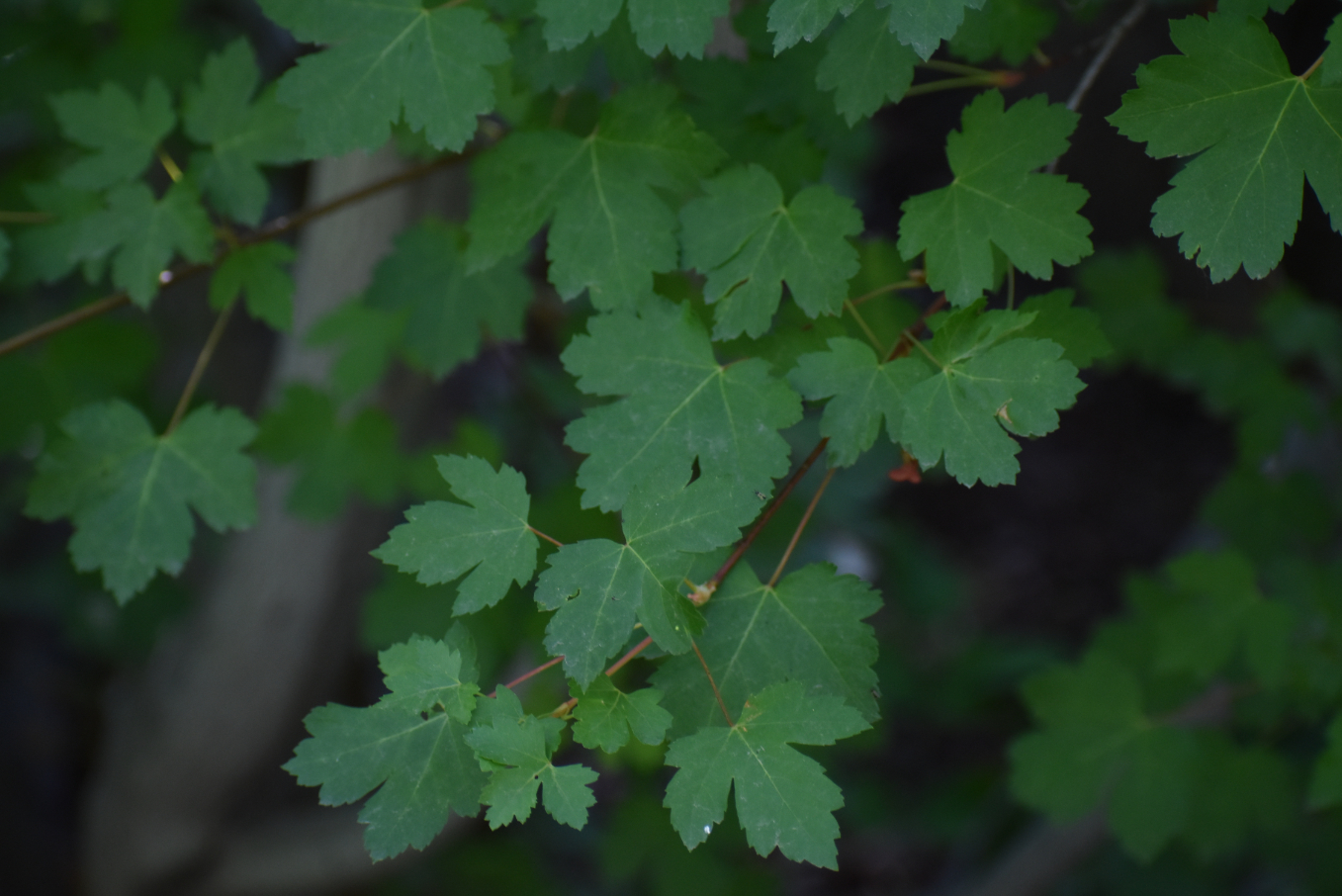
Rocky Mountain Maple
Acer glabrum
Plant Details:
Plant Type: Deciduous Tree
Plant Family: Sapindaceae
Plant Description: Small, multi-stemmed, deciduous tree native to the western United States. Coarsely toothed 5-lobed leaves turn yellow, orange, or red in the fall. Miniscule, inconspicuous flowers give way to winged seeds. Red branches and stems provide winter interest. Tolerant of drought once established.
Maintenance:
Maintenance Type: Tree - Deciduous
Plant Care: Tree - Deciduous (single-stemmed woody plants that lose their leaves every winter): Prune regularly to promote health, provide air circulation, maintain a desirable shape, and to remove dead or damaged branches. Pruning is best done in late winter to early spring for most trees. With spring blooming trees, prune after the blooms are spent. Choose species that are resistant to pest damage. Monitor the tree for pests, diseases or other ailments on a regular basis. Protect the trunk especially where maintenance activities, such as mowing, may cause damage. Newly planted trees in areas with high exposure should have the trunk protected during the winter.
Plant Attributes:
Mature Size: 10-30' tall and wide
Utah Native: Yes
Nativar: Unknown
Plant Select: No
Pollinator Favorite: No
Localscapes: Tree, Perimeter Plant
Evergreen: No
Foliage Interest: No
Foliage Colors: Green
Bloom Colors: Inconspicuous
Bloom Seasons: Spring
Bloom Period: Apr - May
Erosion Control: No
Ground Cover: No
Edible: Yes
Fire Wise: Yes
Growing Conditions:
Hardiness Zone: 5 to 9
Light Requirement: Full Sun (6+ hrs sun), Full Shade (0-4 hrs sun), Part Shade (4-6 hrs morning sun), Part Sun (4-6 hrs afternoon sun)
Irrigation Requirement:  Low (1/2" every 10-14 days)
Salt Tolerant: Yes
Deer Tolerant: Unknown
Garden Location:
-
Neighborhood Landscapes
- Waterwise Woodlands
Garden Staff Tips & Insights:
Edibility notes: All maple trees can be tapped for sap in the early spring. Although the sap is not quite as sweet as that of sugar maple, it can still be consumed fresh or boiled into syrup. The seeds can be collected and separated from the papery wings while they are still green, and are best after being roasted or boiled.
-
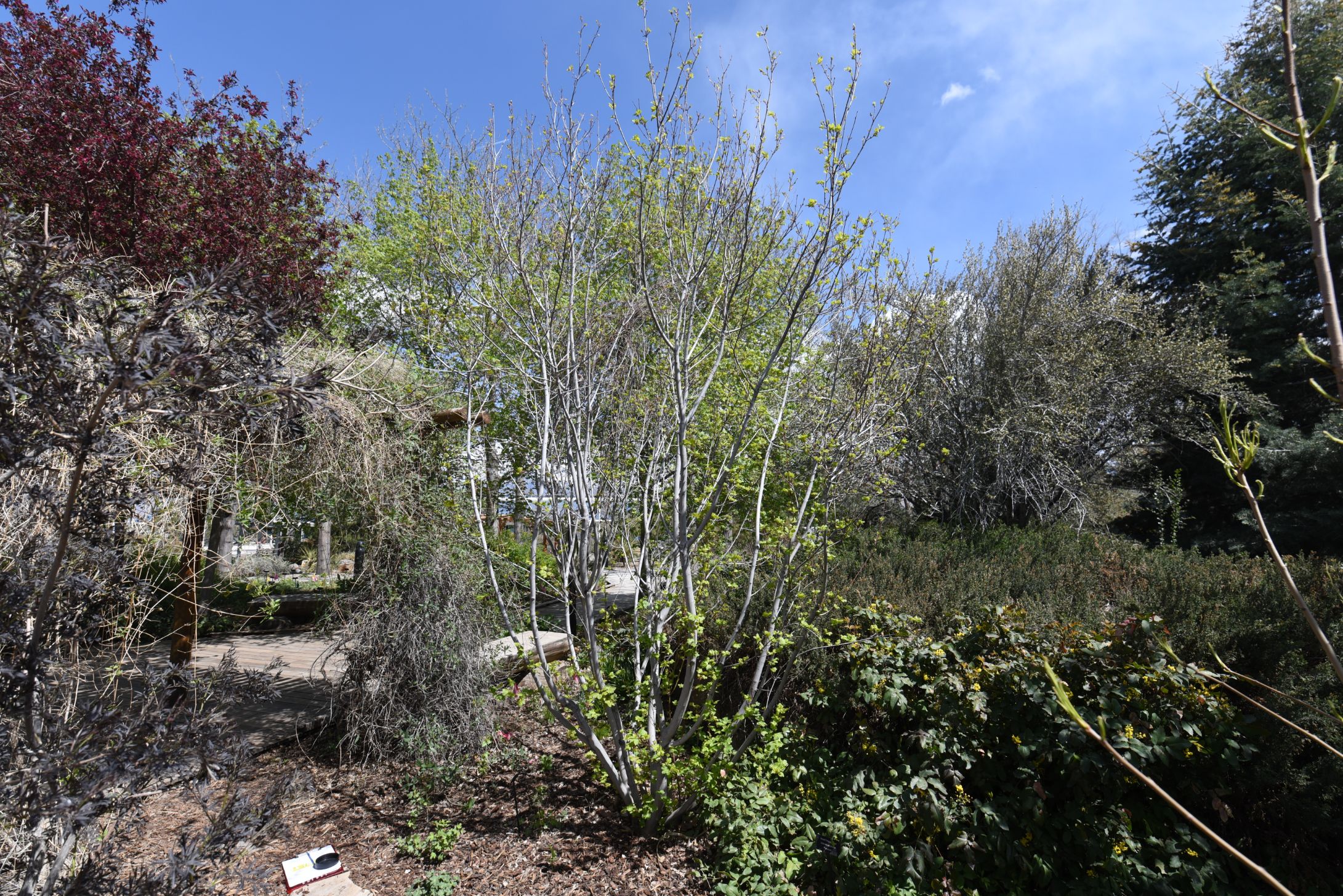 Spring
-
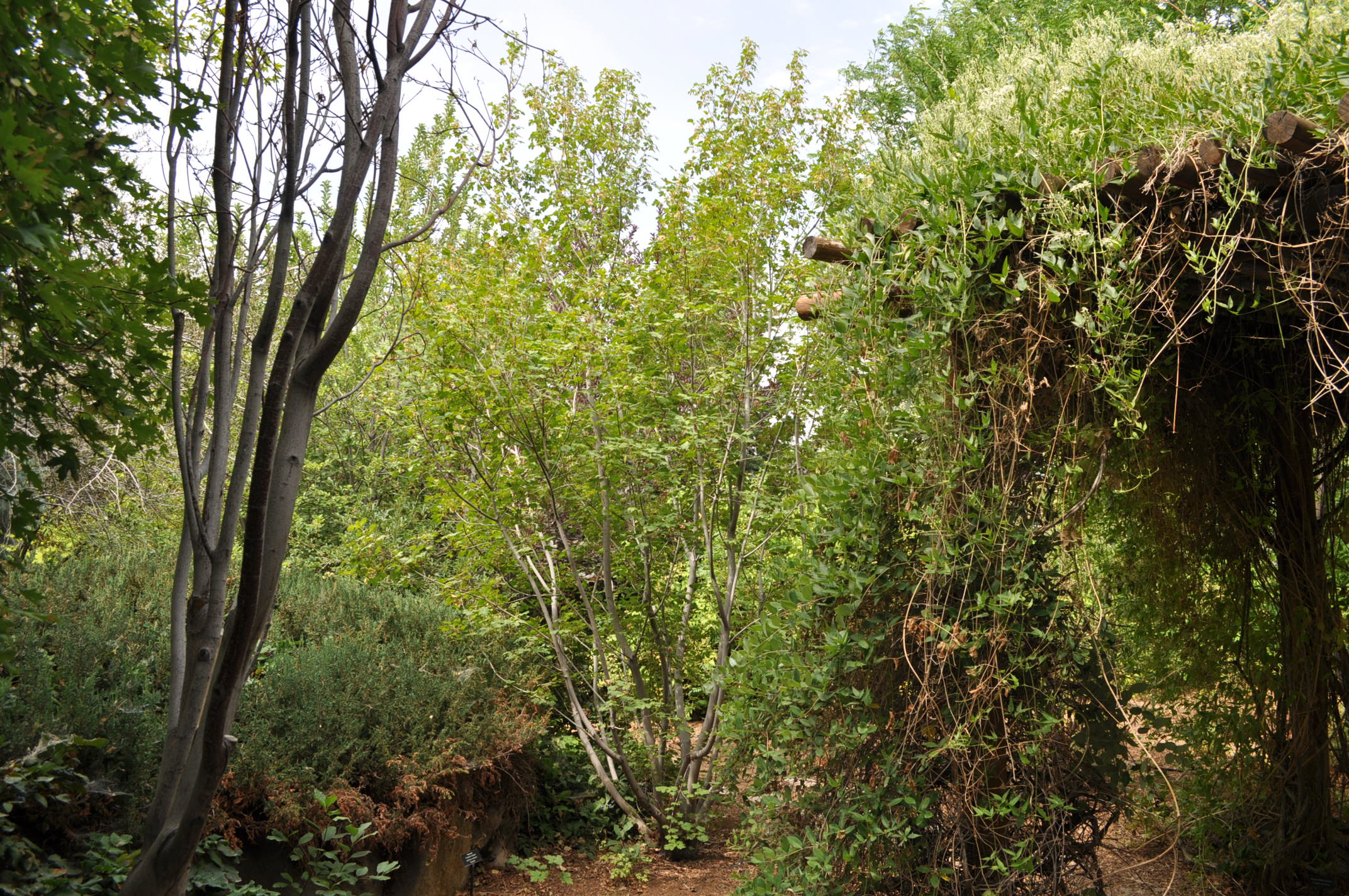 Summer
-
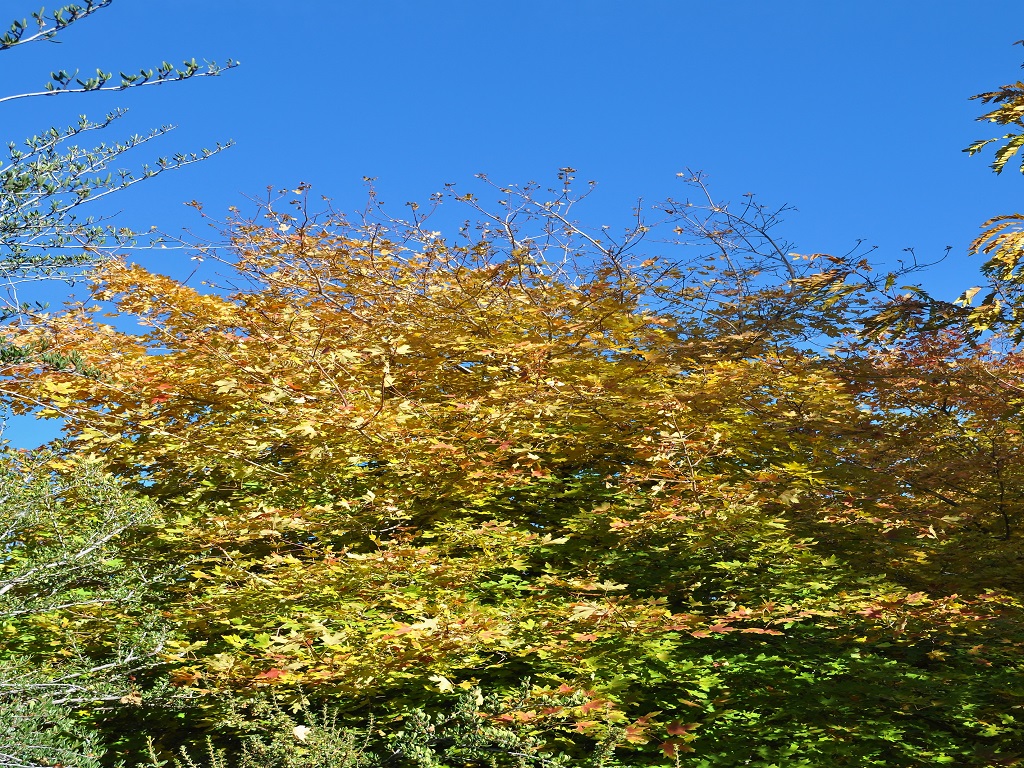 Fall
-
 Winter